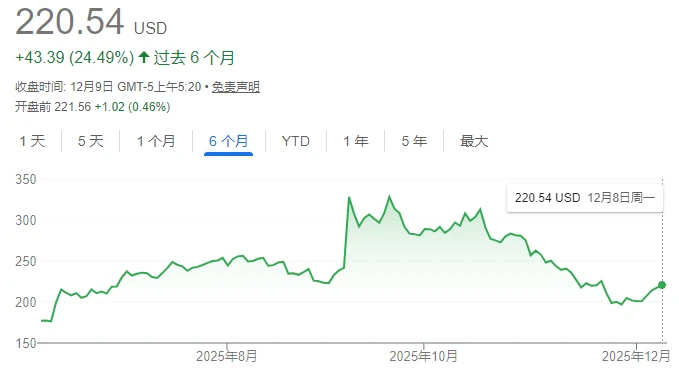
This year, global technology companies have seen a surge in debt issuance to record levels as competition for AI computing power intensifies, forcing even cash-rich companies to borrow heavily to support related investments.
According to Dealogic data, as of the first week of December, global technology companies have issued $428.3 billion in bonds by 2025. Of this, US corporate bonds accounted for a staggering $341.8 billion, while European and Asian technology companies issued $49.1 billion and $33 billion respectively.
There are increasing signs that large technology companies, which traditionally rely on internal cash flow, are turning to debt financing as borrowing costs begin to fall and investor demand is strong.
Michelle Connell, president of Portia Capital Management, stated that debt-funded artificial intelligence Capital expenditures reflect a structural shift—rapid technological obsolescence and short chip lifespans are forcing companies to continuously reinvest.
However, large-scale financing has also begun to increase the leverage ratio of some companies and weaken their debt service coverage ratio, raising market concerns about whether these companies' balance sheets can withstand the pressure if AI investments fail to achieve the expected returns.
An industry analysis of more than 1,000 technology companies with a market capitalization of at least $1 billion shows that, as of the end of September, their median debt-to-EBITDA ratio rose to 0.4, nearly double the level seen during the debt surge in 2020.
Although the leverage ratio is still below the threshold that is usually considered dangerous, this growth rate indicates that debt is growing faster than earnings – which could pose a risk if cash flow does not improve in tandem.
The data also shows that in the second quarter, the median ratio of these companies' operating cash flow to total debt fell to a five-year low of 12.3%, before recovering slightly later this year.
As reported by Cailian Press on several occasions recently, the US credit market has begun to reflect investors' growing caution.
Oracle bone script The 5-year credit default swap (CDS) spread has nearly doubled to 142.48 basis points in the past two months, even for Microsoft. The CDS spread also climbed from around 20.5 basis points at the end of September to about 35 basis points.
Scott Bickley, a consultant at Info-Tech Research Group, points out, " I think this phenomenon stems from a self-perpetuating narrative fueled by market overheating—in terms of stock price, it's either grow big or get out. For AI hyperscalers, this phenomenon is neither sustainable nor replicable as a permanent shift in their operating model."
(Article source: CLS)