On October 21st local time, artificial intelligence AI research company OpenAI has released a new AI-powered web browser, ChatGPT Atlas, to directly compete with Google's Chrome browser.
Following this news, Google's stock price fell by more than 4% during trading on October 21 local time.
OpenAI states that Atlas's appearance and user experience are similar to traditional browsers, but its most distinctive feature is its generative AI chatbot. ChatGPT is the core of this system. This means that users can directly access ChatGPT from any webpage to summarize content, ask questions, or perform tasks.
“We believe that AI represents a once-in-a-decade opportunity to rethink what a browser should be,” said OpenAI CEO Sam Altman at the live-streamed launch event that day.
The Atlas browser is currently available to macOS users worldwide. OpenAI states that Windows, iOS, and Android versions will be released soon.
During the live stream, Ben Goodger, the engineering lead for OpenAI's Atlas project, stated that ChatGPT is the core of the company's first browser. Users in ChatGPT Atlas can interact with search results, just like in Perplexity or Google's AI Mode.
Other AI browsers' "killer feature" is the built-in side panel chat— the chatbot automatically gathers contextual information from the user's screen. It may sound trivial, but many users spend their days copying and pasting text, dragging and dropping files, or adding links to ChatGPT to provide background information. This side panel eliminates these tedious steps, making the user experience smoother.
During the live stream, Adam Fry, product lead at OpenAI, stated that ChatGPT Atlas also features this "sidecar" functionality. Furthermore, Atlas includes a "browsing history" feature, meaning ChatGPT can record the websites a user visits and their actions, providing more personalized responses based on this information.
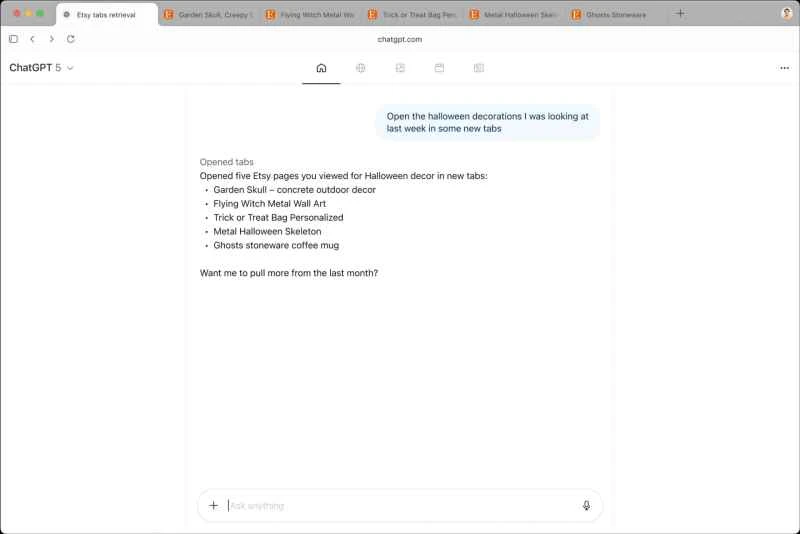
In Atlas, whenever you click a link in a search result, a split-screen interface appears by default: the left side displays the webpage, and the right side displays the ChatGPT conversation history. This design aims to keep the AI "assistant" always nearby. Users can also disable the split-screen mode. During the live stream, employees also demonstrated the browser's webpage summary function and how to select a sentence in an email and click a button to have ChatGPT instantly edit it—a feature known as "cursor chat."
As expected, OpenAI's browser also features a web proxy function. Users can use "agent mode" to have ChatGPT perform some small tasks on their behalf within the browser. The company stated that this feature will initially be available only to ChatGPT Plus, Pro, and Business users.
At OpenAI's DevDay conference, Nick Turley, head of ChatGPT, stated that he was inspired by the way browsers redefined the form of operating systems. Turley pointed out that browsers revolutionized the way people work online, and he believes ChatGPT is a similar revolutionary phenomenon.
Daily Economic News, based on publicly available information
(Source: Daily Economic News)