U.S. stock index futures traded in a narrow range in pre-market trading on Thursday, while most major European indices rose. As of press time, the Nasdaq... S&P 500 futures fell 0.40%, S&P 500 futures fell 0.26%, and Dow Jones futures rose 0.03%.
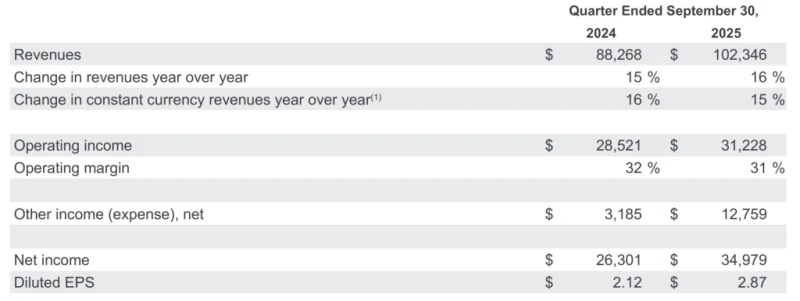
In terms of individual stocks, leading tech stocks generally fell in pre-market trading, with Nvidia among them. Broadcom Advanced Micro Devices (AMD) fell more than 1%, while Tesla... Google-A Slight dip. Oracle . The stock plunged more than 12% in pre-market trading after the company's Q2 FY26 results fell short of expectations and capital expenditures were about $15 billion higher than anticipated.
Most popular Chinese concept stocks fell in pre-market trading, with Pinduoduo among them. Alibaba fell more than 2%. XPeng Motors Bilibili Li Auto It fell by more than 1%.
Cryptocurrency stocks fell in pre-market trading, with SharpLink Gaming down more than 4%, Bitmine Immersion Technologies down more than 3%, and Strategy, MARA Holdings, and CleanSpark down more than 2%.

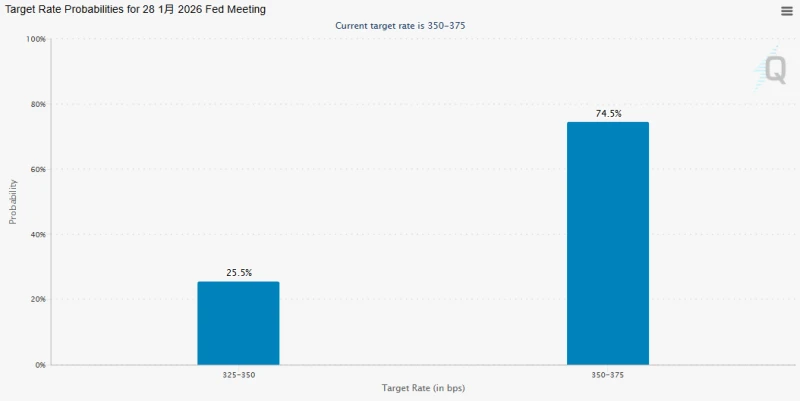
The Federal Reserve cut interest rates by 25 basis points as expected, and the market generally expects the Fed to maintain an accommodative policy next year. Meanwhile, central banks in Europe, Canada, Japan, Australia, and New Zealand generally maintain a tightening stance.
Goldman Sachs Analysts believe that this policy divergence is expected to have a key impact on the exchange rate market around 2026, with the pressure on the US dollar to depreciate becoming a market focus. A weaker dollar may push currencies such as the euro to appreciate passively, thereby suppressing inflation in related regions and ultimately forcing the European Central Bank and other central banks to "cut interest rates."
Hot News
JPMorgan Chase Strategist: Fed will only cut rates once more next year
JPMorgan Private Bank The latest viewpoints indicate that the Federal Reserve will cut interest rates by another 25 basis points in 2026, which is lower than the current market expectation of about 50 basis points.
In a report, Weiheng Chen, global investment strategist at the bank, wrote that the Fed’s latest policy decision showed growing divisions within the committee, with three votes against, the most since 2019.
The voting results reflect a disagreement among the parties regarding the speed of implementing the easing policies.
Furthermore, the dot plot released by the Federal Reserve after the meeting showed that the Fed's interest rate path projections remained consistent with those released three months ago, still expecting a 25-basis-point rate cut next year. Specifically, seven officials believed that rates should remain unchanged in 2026, while eight officials supported at least two rate cuts next year.
Data suggests that U.S. labor market data remains crucial for future interest rate decisions. Despite signs of stabilization, the risk of unemployment may prompt the Federal Reserve to continue its accommodative policy.
The "storage shortage" is unprecedented! UBS: DRAM shortage expected to continue until 2027, DDR prices expected to rise by 35% in Q4.
Driven by a surge in AI demand and industry capacity adjustments, the global storage shortage has intensified over the past few months. A recent report from UBS indicates that the storage industry is facing an unprecedented supply-demand imbalance.
UBS expects the DRAM (Dynamic Random Access Memory) supply shortage to continue until the first quarter of 2027, with demand for DDR memory expected to grow by 20.7%, far exceeding the supply growth rate.
The shortage of NAND flash memory is expected to continue until the third quarter of 2026.
This shortage has triggered the most significant price surge in nearly 30 years. UBS predicts that DDR contract prices will rise 35% quarter-on-quarter and NAND flash memory prices will rise 20% in the fourth quarter of this year, both exceeding previous expectations. In the first quarter of 2026, DDR contract prices are projected to rise a further 30%, and NAND prices a 20% increase.
Goldman Sachs : Gold target price may have room to rise next year; ETF inflows will be the main driver.
Despite record-breaking gold prices, the amount of gold held by US private investors has not changed significantly – a conclusion drawn from an analysis report released by Wall Street giant Goldman Sachs on Wednesday (December 10). According to Goldman Sachs' latest view, this means that gold prices still have room to rise further.
The report shows that since the introduction of gold exchange-traded funds (ETFs) in the mid-2000s, the proportion of gold ETFs held by U.S. private investors is still 6 basis points lower than its peak in 2012. As of the second quarter of this year, gold ETFs accounted for only 0.17% of U.S. private financial portfolios—a negligible fraction of the approximately $112 trillion in stock and bond assets held by U.S. households.
In response, Goldman Sachs analysts wrote that the reason for the low gold allocation among US investors is simple: "Over the past decade, portfolio growth has outpaced the growth of gold prices and trading volumes."
The bank predicts that gold prices will reach $4,900 by the end of 2026, but also states that this forecast carries a "significant upside risk" if private sector purchases exceed those of central banks, which have dominated demand in recent years.
US Stocks Focus
Oracle's financial report reignites concerns about an AI bubble.
Oracle's second-quarter report shows that it has made significant progress in artificial intelligence. Data Center Expenditure on AI and other equipment has increased significantly, but the rate at which these rising investments are translating into cloud revenue has failed to meet investor expectations. This has raised concerns in the market about whether AI-related investments can be quickly converted into profits, causing Oracle's stock price to plummet by more than 12% in pre-market trading.
As a result, other AI and semiconductor companies , such as Nvidia (NVDA.US), have also been affected. Stocks also generally fell in pre-market trading. Oracle's earnings have reignited concerns about overvaluation of tech stocks and whether capital investment in artificial intelligence infrastructure will yield returns, rekindling doubts that caused weeks of market volatility in November.
While the technology sector has driven the S&P 500's remarkable gains this year, concerns about AI spending have prompted some investors to shift funds to other sectors, given the still-strong U.S. economic outlook. Broadcom will release its earnings report after the market closes, at which time the market will reassess the robust momentum of the artificial intelligence industry.
A $900 million investment has turned into hundreds of billions; SpaceX's IPO will bring this tech giant a hundredfold return.
Google may be poised for a major boost – the IPO of SpaceX. A significant early-stage investment Google made could become one of its most profitable investments ever, and is expected to pay off next year.
In 2015, Google invested approximately $900 million in Elon Musk's SpaceX, acquiring about a 7% stake. At the time, SpaceX was valued at only $12 billion.
The latest news indicates that SpaceX is moving forward with its initial public offering (IPO) plan, aiming to go public in 2026 with a target valuation of approximately $1.5 trillion and an expected fundraising scale of over $30 billion.
Sources familiar with the matter say SpaceX is working with several financial institutions to assess key aspects such as the IPO window, offering structure, and potential valuation. The plan is not yet finalized, and the timing and size may still be adjusted depending on market conditions.
In response, Musk confirmed SpaceX's upcoming IPO on social media platform X the previous day. If SpaceX goes public at this valuation, it will bring Google's stake to approximately $111 billion.
Novo Nordisk The stock price has fallen back to 2021 levels, and analysts are cautiously optimistic about a valuation recovery.
Danish pharmaceutical giant Novo Nordisk's stock price has plummeted this year, even falling back to levels seen in 2021 for its weight-loss drug. The stock price is at pre-boom levels. Nevertheless, analysts remain cautiously optimistic that the company's share price will recover to reasonable levels.
As of now, Novo Nordisk's stock price has plummeted by more than 50% this year, and is about to record its worst year in the company's history.
Multiple negative factors dragged down Novo Nordisk's stock performance, including disappointing results from clinical trials of new drugs, multiple downward revisions of the company's profit forecasts, and fierce competition in the weight-loss drug market. This plunge almost wiped out all of Novo Nordisk's gains since 2021.
Analysts are generally still bullish on Nord and Nord stocks, with some institutions—such as Kerry Holford of Berenberg—believing that the stock price has fallen too much and should be valued higher.
"At the current share price, the market is undervaluing its R&D pipeline," Holford wrote in a report last week. "Given Novo Nordisk's strong track record of R&D returns, we are willing to give the R&D pipeline a higher premium."
TSMC With advanced packaging capacity in short supply, Nvidia aims to capture more than half of next year's market share.
Advanced packaging technology is becoming a key issue in the artificial intelligence industry. According to a report, TSMC , a major supplier, has already booked all of its advanced packaging capacity, with Nvidia accounting for more than half of the share.
A report by DigiTimes indicates that Nvidia has ordered 800,000 to 850,000 wafers from TSMC for production in 2026, a substantial share compared to competitors such as Broadcom and AMD.
TSMC's CoWoS advanced packaging solution has always been the most favored technology in the industry. However, supply chain sources previously pointed out that TSMC was unable to meet the industry's growing packaging demand and decided to outsource some orders to companies in Taiwan such as ASE and SPIL.
Meanwhile, TSMC is actively expanding its CoWoS production lines, planning to build new factories in Taiwan and the United States. Nevertheless, this has led some companies to consider alternatives, such as Intel. Intel's EMIB technology has thus emerged as a dark horse. Industry insiders say that some manufacturers have already begun to consider switching from TSMC's CoWoS solution to Intel 's EMIB technology.
(Article source: Hafu Securities) )