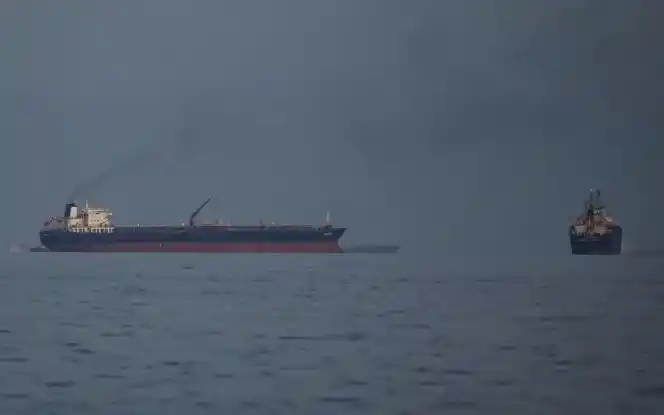
Oil tankers and cargo ships in the Strait of Hormuz on March 11. Photo: AP
Amid escalating tensions in the Middle East, many countries are urgently seeking ways to secure energy shipping lanes through the Strait of Hormuz – a vital artery for global oil and gas transportation.
Indonesia says it is holding talks with Iran to ensure its oil tankers can safely pass through the strait. Indonesian Foreign Ministry spokesman Vahd Nabyl Achmad Mulachela said Iran has responded positively to Indonesia's diplomatic efforts, paving the way for granting permission for Pertamina-owned vessels to pass through.
Currently, the two oil tankers, Pertamina Pride and Gamsunoro, remain in the Persian Gulf. One tanker carries crude oil for domestic needs, while the other transports fuel for overseas customers. Indonesian officials stated that they will continue to coordinate with relevant parties and prepare the necessary conditions, such as ensuring the safety of the crew and securing maritime insurance, before the ships are allowed to move.
Alongside Indonesia, Thailand has also reached an agreement with Iran to allow its oil tankers to safely pass through the Strait of Hormuz. Thai Prime Minister Anutin Charnvirakul said the agreement helps alleviate concerns about fuel supply and reduces the risk of disruptions that occurred earlier this month.
The conflict between the US and Israel and Iran, which erupted in late February 2026, has nearly paralyzed shipping activity through this maritime route. According to data from the US Energy Information Agency (EIA), more than 80% of crude oil and liquefied natural gas (LNG) transported through the Strait of Hormuz is destined for Asian countries.
Iran's declaration to close the strait has left several Southeast Asian countries facing severe fuel shortages. According to data service company Kpler, cargo traffic through the strait decreased by as much as 95% between March 1 and 26, 2026.
Faced with escalating risks, the Thai government has implemented a series of emergency response measures to mitigate the impact of supply shortages and rising fuel prices on the economy and people's lives. Agreements reached with Iran are expected to help alleviate immediate pressure, although the prospects for the stability of this strategic shipping route remain heavily dependent on the course of the conflict in the region.