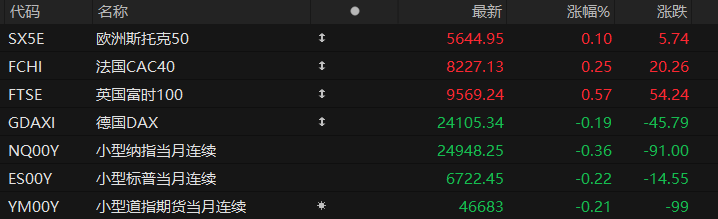
On December 17th local time, major US tech stocks collectively declined. Nvidia... Oracle , a star AI stock, fell nearly 4%. It fell 5.4% to close at $178.46 per share, a 48% drop from its year-to-date high, almost erasing all gains made so far this year.
Along with the stock price decline, market sentiment has also been affected. Recently, Turing Award winner and Meta's chief AI scientist, Yann LeCun, criticized the mainstream technology approach of large-scale models. Bridgewater, the world's largest hedge fund, and CICC... Several institutions have issued warnings about the potential risks of AI. The debate over whether the "AI bubble is on the verge of bursting" is escalating.
Discussions about the AI bubble intensify.
Recently, Greg Jensen, co-chief investment officer (CIO) of Bridgewater Associates, the world's largest hedge fund, stated that as large technology companies increasingly rely on "external capital" to support rising costs, artificial intelligence... The AI spending spree is entering a “dangerous” phase.
On December 17, China International Capital Corporation (CICC) released a research report stating that Oracle's stock price experienced a significant pullback after disclosing its large capital expenditure plans. This phenomenon reflects a shift in the market's investment logic regarding artificial intelligence . The optimistic narrative driven solely by capital expenditure may no longer dominate, and investors are beginning to re-examine potential risks, including investment returns, financing conditions, and inter-company relationships.
The report indicates that although AI is considered one of the most promising technologies for the future, its commercialization path remains unclear. As investment scale continues to expand, the marginal efficiency of AI investment is likely to decrease, while costs have not declined. AI investment is still in a phase of "diseconomies of scale," and market concerns are driving a reassessment of stock valuations. Furthermore, corporate AI investments primarily come from external financing; if market confidence falters and financing costs rise, it could lead to the interruption of investment plans.
Furthermore, a significant characteristic of this wave of AI is the deep collaboration among tech giants. Companies like Nvidia , OpenAI, and Oracle have formed a close-knit network. If one of these companies encounters difficulties due to failed investments or cash flow problems, the negative impact could quickly spread throughout the entire industry, triggering a chain reaction.
"Following Oracle's significant stock price correction, the stock prices of other related companies also weakened in tandem. Even Broadcom , whose earnings exceeded expectations..." Its stock price was also significantly impacted, CICC stated.
The technical approach is constantly controversial
It's worth noting that recently, Meta's chief AI scientist, Yang Likun, publicly criticized the current mainstream AI technology approach. He stated that Silicon Valley's over-reliance on large language models may be a "collective illusion" and unlikely to lead to true general artificial intelligence. Simultaneously, he announced his departure from Meta to start his own company, which has clearly shifted its focus to developing "world models."
This well-known scientist's public "shift" has also raised concerns in the market: as tech giants like OpenAI and Google continue to invest hundreds of billions of parameters in training large models, are there any hidden risks?
Yang Likun's viewpoint is not an isolated case. Recently, a paper titled "The Fundamental Limitations of Large Language Models," co-authored by researchers from Google DeepMind, Meta, Stanford, and other institutions, poured cold water on the "scale-first" trend in large language models from a theoretical perspective. The study points out that improving the performance of large language models faces five limitations that cannot be addressed simply by increasing the amount of data. The "ceiling" of parameter breakthroughs is particularly prominent in the problem of "illusion" (i.e., fabricated information).
The paper argues that current mainstream model evaluation systems actually encourage models to guess rather than honestly admit the unknown—because "not knowing" and "answering incorrectly" receive the same score.
Another major drawback of this type of model is its "high consumption and low output." Yang Likun stated that a four-year-old child only needs about 16,000 hours of real-world perception to form a basic understanding of the world, while large language models often need to consume nearly a century's worth of data to barely approach a similar level of ability. In other words, it's more like a costly "probability game ." "This may not be the optimal path to general artificial intelligence."
Most investment institutions remain optimistic about AI
BlackRock Recent opinions also reveal a shift in investment consensus. BlackRock stated that some internal views suggest the US stock market still has upward momentum, with artificial intelligence seen as a key earnings driver continuing until 2026. This is expected to continue driving productivity growth. However, some investment managers remain cautious about the current market. Concerns mainly focus on the similarities between the current market structure and the historical dot-com bubble, such as over-concentration of leading sectors, high valuations, and crowded trading. Furthermore, doubts remain about the actual returns on large-scale investments in AI, leading some institutional investors to shift towards defensive allocations, such as healthcare and utilities. Similar assets. Some argue that with accelerated AI investment, certain software stocks may face pressure.
However, according to the views of many foreign institutions, AI remains one of the main promising directions for the future.
On December 17th, Mark Haefele, Chief Investment Officer of UBS Global Wealth Management, predicted that global AI capital expenditure will continue to increase in the coming years, with no signs of an investment bubble. This is as AI applications expand from consumer chatbots ... Extending to the enterprise and industrial sectors, the required computing power will far exceed the scale of existing infrastructure.
Fidelity In its 2026 Global Investment Outlook, the international firm stated that the development and investment logic of AI is clear, and recommended to comprehensively capture investment opportunities in all aspects of the AI value chain, including hyperscale cloud service providers and chip manufacturers. It also suggested to pay attention to companies with low valuations that are catching up and seeking potential opportunities.
"Among them, China's AI progress is particularly noteworthy." Fidelity International believes that an independent AI ecosystem, a huge domestic market, favorable policies, and an expanding consumer base will accelerate the wider application of AI, providing support for the performance of Chinese technology stocks in 2026 and beyond.
(Source: China Securities) (Report)