A recent report indicates that global electric vehicle sales growth in 2026 is projected to be the lowest since the COVID-19 pandemic hit the global economy in 2020, as the transition away from gasoline-powered vehicles faces new obstacles.
According to research firm Benchmark Mineral Intelligence, global electric vehicle sales (including pure electric vehicles and plug-in hybrid vehicles) are projected to grow by only 13% to 24 million units in 2026, far below the estimated 22% growth in 2025, due to a significant slowdown in the European market and a rapid contraction in the US market.
Corporate executives and analysts point out that factors such as the Trump administration's cancellation of tax breaks for electric vehicles and the EU's easing of its ban on gasoline-powered cars, originally scheduled to take effect in 2035, will all impact the industry's fate this year.
Prior to this, the explosive demand for electric vehicles led by China over the years had once suggested that gasoline-powered cars would soon disappear, which had been the mainstay of the global automotive industry's profits for more than a century.
According to Benchmark Mineral Intelligence, U.S. electric vehicle sales are projected to decline by 29% to 1.1 million this year, after reaching a record 1.5 million units in 2025.
European electric vehicle sales are projected to grow by 33% in 2025, but growth is expected to slow to 14% this year – to 4.9 million units.
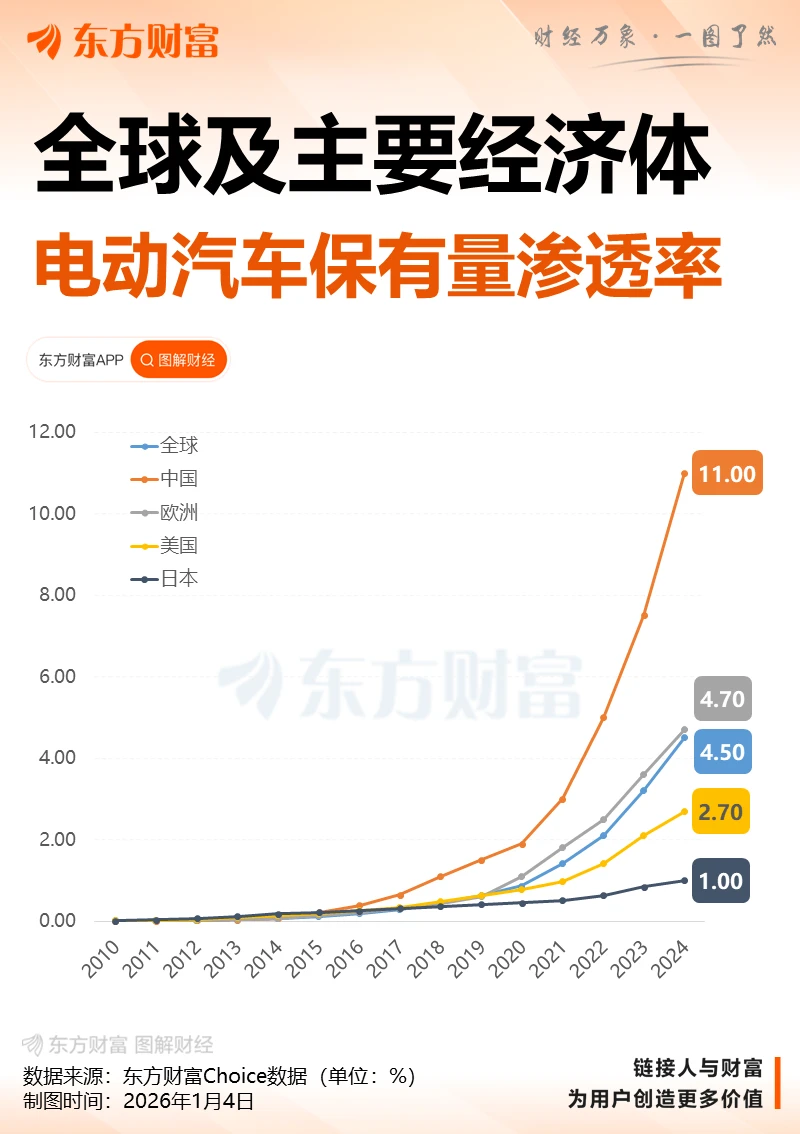
In China, the world's largest electric vehicle market, sales are projected to reach 15.5 million units this year, up from 13.3 million in 2025. However, while still maintaining double-digit growth, the expected growth rate in the Chinese market will be lower than the levels of the five years preceding 2025. During that period, sales of electric vehicles in China, including plug-in hybrids, surged from approximately 1.1 million units to over 13 million units.
Last year, with BYD Chinese manufacturers, represented by [names of manufacturers], have driven sales growth in both their domestic and European markets by launching more affordable models, and their price advantage has suppressed traditional European and American automakers.
Data released earlier this week showed that BYD has overtaken Tesla. With the goal of becoming the world's largest electric vehicle manufacturer by 2025, this Chinese company is continuing to expand in Europe and other overseas markets.

Pure electric vehicles are met with a cold reception.
The report shows that industry executives generally expect sales of hybrid and plug-in hybrid vehicles to continue to rebound this year. As insufficient charging infrastructure makes consumers hesitant to buy pure electric vehicles, hybrid vehicles are becoming increasingly popular.
Ford CEO Jim Farley stated, "Both the European and American markets recognize that partial electrification is just as attractive as full electrification."
One sign of the dramatic upheaval in the U.S. market was Ford's disclosure last month of a $19.5 billion write-down as it shifted its focus to more profitable hybrid and internal combustion engine-based vehicles after abandoning a range of all-electric models, including its flagship F-150 all-electric pickup truck.
Farley said electric vehicles’ share of the U.S. new car market may fall from about 10% last year to 5% in the near future.
In stark contrast to the US market, most automotive executives expect China's electric vehicle market to continue growing in 2026, albeit at a slower pace than in recent years. Sales in China are still likely to benefit from broader stimulus measures aimed at boosting domestic demand, as well as local government investment in charging infrastructure. UBS forecasts that sales in the Chinese market (including pure electric vehicles and plug-in hybrids) will grow by 8% this year.
Industry executives say the grim outlook this year means automakers must continue to adjust their product lineups as they transition from gasoline-powered to electric vehicles.
Markus Haupt, CEO of Seat-Cupra, Volkswagen's Spanish mass-market brand, said the group needs to maintain the flexibility of its product lineup during the transformation, but added, "We firmly believe the future belongs to electric vehicles. We need to decarbonize transportation."
Dongcai Illustrated Guide: Some Useful Tips
(Article source: CLS)