Today, let's focus on AI chips in the tech world. In the battle, Google dealt a heavy blow to Nvidia. And OpenAI and Japan's SoftBank.
Nvidia's position is beginning to weaken.
SoftBank Group shares plummet
On November 25, Nvidia 's stock price fell in pre-market trading after reports surfaced that Meta was in talks to spend billions of dollars to acquire Google's artificial intelligence technology . The chip is seen as a sign that the search giant is making progress in creating a competitor and challenging the best-selling AI accelerator.
According to sources familiar with the matter, Meta is discussing plans for data centers in 2027. These chips are used in the process—they are called Tensor Processing Units (TPUs). The report also states that Meta may lease chips from Google Cloud next year.
Google's stock price rose as much as 2.7% in after-hours trading, while Nvidia's fell 2%.
Once the agreement is reached, it will help establish TPUs as an alternative to Nvidia chips. Currently, Nvidia chips are the "gold standard" for large tech companies and startups, with companies like Meta and OpenAI relying on their computing power to develop and run AI platforms. Google has previously reached an agreement with Anthropic to supply it with up to 1 million TPU chips. However, Nvidia still dominates this market.
Following the announcement of the deal with Anthropic, analysts said, "This move is a very strong endorsement of TPU, which many people had been considering before, and now there are likely to be even more people starting to consider it."
A deal with Meta—one of the world's largest investors in data centers and AI development—would be a victory for Google. But the key lies in whether this tensor chip can prove itself in terms of energy efficiency and computing power, demonstrating its long-term viability.
This tensor chip was first developed over a decade ago, initially designed specifically for artificial intelligence tasks. Now, it's gaining momentum outside of Google's ecosystem, seen as a solution for training and running complex AI models. Its appeal is further amplified as global companies worry about over-reliance on Nvidia.
Shares of SoftBank Group plunged on Tuesday, hitting a two-and-a-half-month low, following the news. The market is concerned that Google's newly launched Gemini AI model could intensify competition with OpenAI, a core investment of the Japanese giant.
The stock price once plummeted by 11%, and even for SoftBank, which is known for its volatile stock prices, such a sharp drop over two consecutive days is particularly striking.
Analysts said, "The market is worried that OpenAI will face a more challenging competitive environment after the strong reviews of Google Gemini 3, which has hit SoftBank's stock price."
Less than a month ago, SoftBank Group briefly became the second Japanese company, after Toyota Motor, to surpass a market capitalization of 40 trillion yen (approximately US$255 billion), but its market capitalization has since fallen by more than 40% from its peak.
A-shares surge
Let's take a look at the performance of A-shares today.
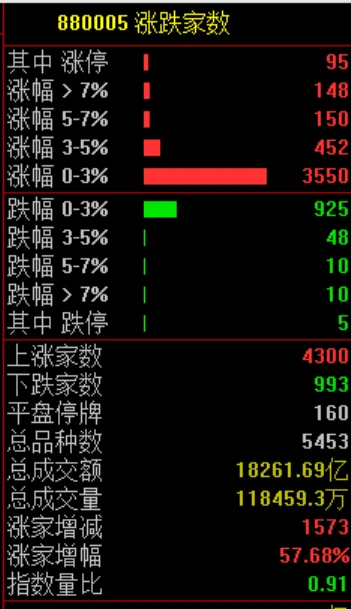
On the 25th, the market rebounded throughout the day, with all three major indices rising. At the close, the Shanghai Composite Index rose 0.87%, the Shenzhen Component Index rose 1.53%, and the ChiNext Index rose 1.77%.
A total of 4,300 stocks rose, 95 stocks hit their daily limit, and 993 stocks fell.
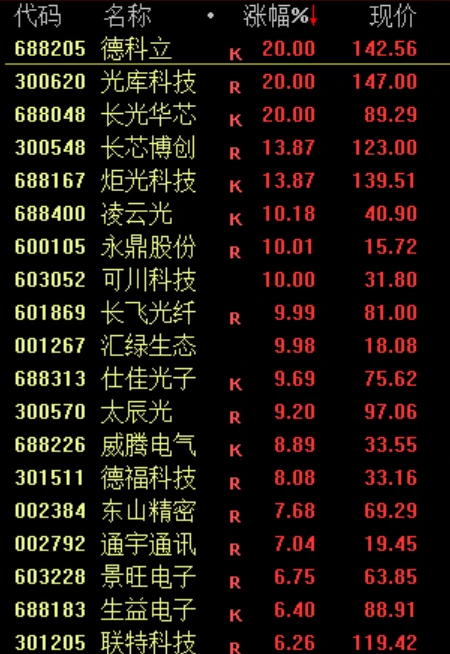
Shares of computing hardware companies surged collectively, with Deco Technology leading the charge. Guangku Technology Many stocks hit their daily limit.
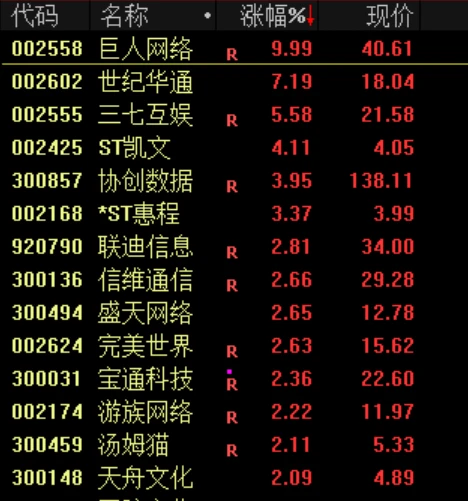
game Giant Interactive It hit the daily limit up.
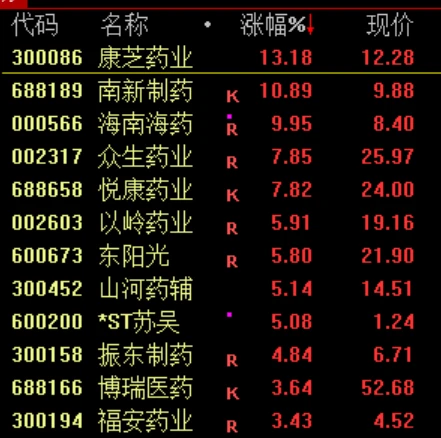
Anti- influenza Concept stocks performed actively, with Hainan Haiyao among them. It hit the daily limit up.
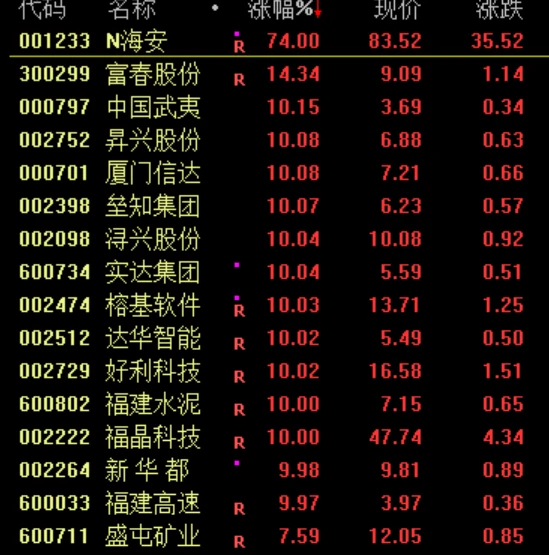
Fujian-based stocks rebounded, with China Wuyi... Xiamen Xinda Waiting for it to hit the daily limit.
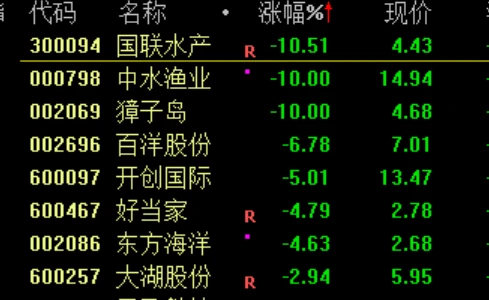
On the downside, aquatic product stocks collectively declined, with China Fisheries Group among them. Zhangzidao It hit the daily limit down.

(Source: China Fund News)