According to a recently leaked internal memo, Meta, a major smart glasses manufacturer, is working on a lightweight mixed reality solution. The release date for the glasses (codenamed "Phoenix") has been postponed from the second half of 2026 to 2027.
This also means that in AI glasses While developing rapidly, tech giants will spend more time figuring out how to get the public to accept mixed reality glasses like Vision Pro.
According to reports, Maher Saba, Vice President of Reality Labs, stated in a memo to employees on Thursday that the release date of the Phoenix glasses has been postponed to the first half of 2027. In another memo, Gabriel Aul and Ryan Cairns, heads of the Metaverse business, also stated that delaying the release date "will give us more time to get the details right."
The two added, " We have a lot of work progressing under a tight launch schedule, and it will bring significant changes to our core user experience, but we won't do so at the expense of refinement and a reliable experience. "
It's worth noting that Meta restructured its Metaverse division in October of this year, appointing Aul, who previously headed Meta Horizon products, and the former head of virtual reality... Cairns, who co-leads the hardware division, is currently considering cutting up to 30% of the budget for the Reality Labs division, which could impact staff on the Horizon Worlds virtual space platform project.
According to previous reports, the Phoenix glasses have a "goggles"-like design but weigh only 100 grams. They transmit digital video of the real world to an internal display via a camera. Sources say the device resembles the Bigscreen headset from a16z investors.
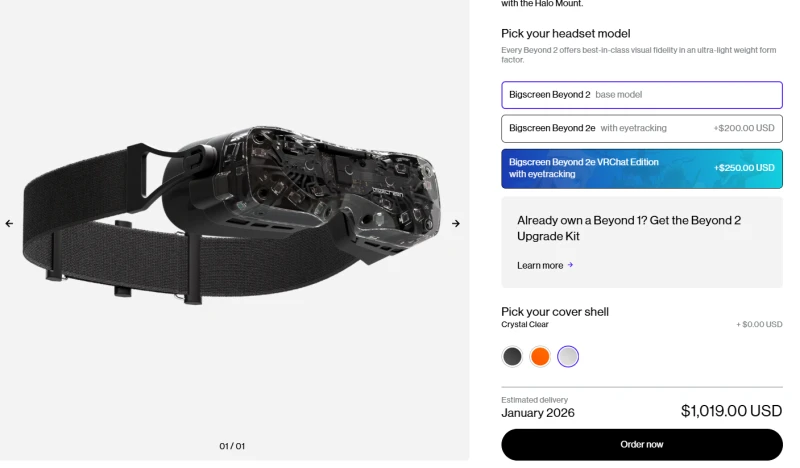
(Source: Bigscreen official website)
Similar to the Vision Pro, Phoenix uses a "disc-shaped" external battery. Power supply. Meta executives had reservations about the disc design, but ultimately decided to retain it due to concerns about the headset's weight, wearing comfort, and the risk of overheating.
In the memo, Maher Saba also revealed that Reality Labs' leadership received feedback on their submitted 2026 work plan during a recent meeting with CEO Mark Zuckerberg. He stated that this feedback " focused on making the business sustainable and spending more time delivering our experiences at a higher quality ."
Saba added, “Based on this, many teams at Reality Labs will need to adjust their plans and schedules. At the same time, extending the schedule does not mean that we should add more features or take on extra work.”
Regarding other work arrangements, the memo revealed that the company plans to release a limited-edition wearable device codenamed "Malibu 2" in 2026. It has also begun development on the next-generation Quest device, which will focus on immersive gaming. The focus should be on not only achieving a significant upgrade in capabilities, but also "significantly improving the economic efficiency of the unit".

(Article source: CLS)