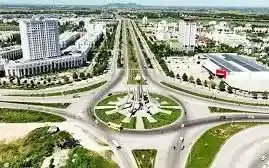
The most noticeable change is in the transportation system. From a locality with limited connectivity, Thanh Hoa has gradually formed a comprehensive transportation network with tens of thousands of kilometers of roads, including the North-South expressway which serves as the backbone. National highways, provincial roads, coastal roads, and roads connecting industrial zones have been invested in synchronously, creating connectivity between regions within the province and providing quick access to major economic centers.
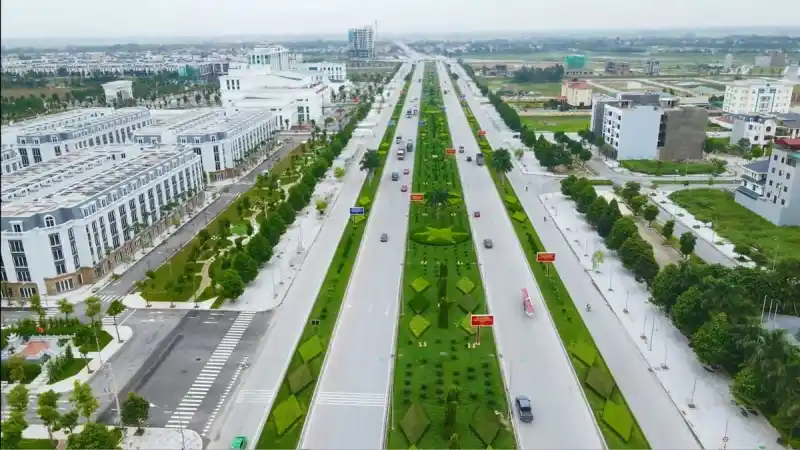
Over the years, the province has identified infrastructure development as one of the strategic breakthroughs in attracting investment, thereby focusing resources on synchronized investment to create a foundation for long-term growth.
In addition, many important transportation projects are being implemented, such as the coastal road, the route from Bim Son Industrial Park to the coastal road section from Nga Son to Hoang Hoa, the upgrading and expansion of the Southern Ma River Boulevard, and the road from Voi Junction to Sam Son... When completed, these projects will create a multi-directional transportation network, connecting mountainous areas to the plains and coastal regions, contributing to the effective exploitation of the potential for marine economic development, tourism, and industry.
Furthermore, the province is continuing to study expanding its development space through inter-regional transportation projects such as the eastern branch of Ring Road 3, the section from Hoang Hoa commune to Quang Binh commune, the road connecting National Highway 217 with National Highway 45, as well as the transportation route connecting Thanh Hoa with Hoa Binh province. These projects are expected to create further impetus for regional economic development, strengthen connectivity with the Northwest region and the North Central provinces, and expand the province's development space in the coming period.
The key is not just the number of projects, but their connectivity. When a project has easy access to highways, seaports, and airports within the same infrastructure chain, logistics costs are significantly reduced, while increasing flexibility in production and distribution.
Thanh Hoa is also one of the few localities that possesses a complete range of transportation options. The Thanh Hoa seaport is currently a Class I seaport, planned to have the potential to become a special seaport. Currently, 35 berths, mooring buoys, and transshipment anchorage areas are operational, with a total length of over 5,343 meters and a designed capacity of approximately 75.2 million tons of cargo per year, capable of receiving vessels up to 70,000 DWT. Meanwhile, Tho Xuan Airport is planned for the period 2021-2030, with a vision to 2050, functioning as an international airport and serving as a backup for Noi Bai Airport, contributing to expanding a rapid connection channel for cargo and passenger traffic.
The presence of this multimodal transport system not only helps businesses shorten transportation time but also enhances their ability to participate in global supply chains – an increasingly important factor in the context of an integrated economy.
Besides transportation, Thanh Hoa province is also investing in the infrastructure of its economic zones and industrial parks with a proactive approach. The Nghi Son Economic Zone, acting as a center for industry, energy, and logistics, has been attracting many large-scale projects. Simultaneously, the system of industrial parks and clusters throughout the province is expanding, creating a ready supply of clean land and production facilities for investors. This preparation of infrastructure not only shortens project implementation time but also significantly reduces opportunity costs – a factor that many businesses are particularly concerned about when deciding to invest.
Another noteworthy point is the synchronized development of energy, urban, and telecommunications infrastructure. The electricity system is ensured to be stable with many large-scale power plants; telecommunications and internet infrastructure covers most areas, creating a foundation for digital transformation and the development of the digital economy. Cities are being invested in with a modern orientation, gradually becoming service centers supporting production and business activities.
During the period 2021-2025, the province mobilized approximately VND 6,296 billion to invest in the development of technical infrastructure in the Nghi Son Economic Zone – one of the key economic zones in the country. To date, the province has 11 industrial parks with completed infrastructure and attracting secondary investors; 8 industrial parks are currently undergoing land clearance and infrastructure investment. In addition, there are 49 industrial clusters in the province, with businesses as the main investors, currently constructing infrastructure with a total area of approximately 1,738.5 hectares and a total registered investment capital of approximately VND 12,851 billion. Of these, 21 industrial clusters have basically completed their technical infrastructure and begun attracting secondary investment projects. The strong development of industrial park and cluster infrastructure has created favorable conditions for businesses to invest in production, while also providing employment for tens of thousands of workers.
In reality, the development of synchronized infrastructure is also a crucial factor in attracting strategic investors in the tourism sector. Over the years, with the participation of many large corporations such as Vingroup, Sun Group, FLC, Eurowindow, and T&T, Thanh Hoa's tourism sector has attracted a total registered capital of approximately 152,000 billion VND. Many large-scale projects have been completed and put into operation, such as the FLC Sam Son resort and golf course complex, the Sam Son beach square and festival landscape axis, Sun Beauty Onsen, and Flamingo Linh Truong... Not only focusing on beach tourism, Thanh Hoa is also strongly developing eco-tourism products, as well as cultural, historical, and spiritual tourism. Eco-tourism destinations such as Pu Luong, Ban Ma, Ban Ngam, and Thac May in the western part of Thanh Hoa are being developed in conjunction with preserving the traditional cultural values of the ethnic minorities.
In the commercial sector, the retail infrastructure has also developed strongly. Currently, the province has 2 shopping malls, over 100 general and specialized supermarkets, and more than 60,000 retail stores. Notably, the Aeon Mall project – a leading large-scale modern retail complex in the North – is being accelerated by the investor and is expected to be completed in 2026, promising to become a new commercial highlight of the province. Telecommunications and internet infrastructure is 100% covered in the centers of communes and wards in the province, creating a foundation for the development of the digital economy and digital transformation. The power system in the province has received an investment of approximately 6,500 billion VND, ensuring that 100% of communes and wards have access to the national power grid, with the percentage of households with electricity reaching 99.58%.