According to earlier information from the state news agency TASS, this ban is expected to last until July 31.
This move comes amid significant volatility in the energy market. Deputy Prime Minister Novak noted that the crisis in the Middle East is causing instability in the global oil and petroleum product markets, leading to considerable price fluctuations. However, he emphasized that the continued high demand for Russian energy in the international market remains a positive factor.
To reassure the domestic market, the Russian government asserted that crude oil processing volumes remain at levels equivalent to those of 2025, thereby ensuring a stable supply of petroleum products.
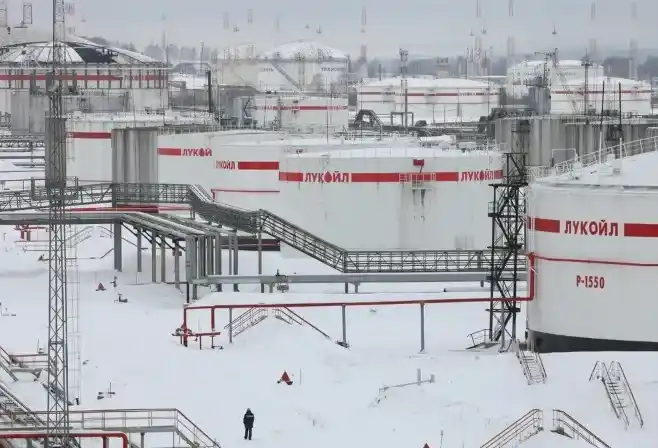
Gasoline storage tanks at a refinery in Russia (Photo: Bloomberg).
In fact, Russia has repeatedly imposed restrictions on gasoline and diesel exports to curb rising domestic fuel prices and prevent the risk of shortages.
In 2025, many regions in Russia, as well as some areas in Ukraine, experienced gasoline shortages. The main reasons were increased Ukrainian military operations targeting Russian oil refinery infrastructure, coupled with a seasonal increase in fuel demand.
According to sources in the energy industry, Russia exported nearly 5 million tons of gasoline in 2025, equivalent to an average of about 117,000 barrels per day.
Previously, on March 12, the US Treasury Department issued a 30-day permit allowing countries to purchase Russian crude oil and petroleum products currently stranded at sea. This move marked a temporary easing of economic sanctions against Russia, aimed at cooling soaring global energy prices following the outbreak of conflict in the Middle East.
According to the permit published on its official website, the US Treasury Department has authorized the delivery and sale of Russian crude oil and petroleum products that were loaded onto ships before 00:01 AM on March 12 (Eastern Time). This permit will be valid until 00:01 AM on April 11. Previously, on March 5, the US also granted a similar 30-day exception specifically for India.
According to Fox News, as of March 12th, approximately 124 million barrels of oil originating from Russia were floating at sea in 30 different locations worldwide. The amount of oil "released" thanks to US permits is estimated to provide a supply for about 5-6 days, partially offsetting the daily oil shortage from the Strait of Hormuz.
In a statement on the X platform (formerly Twitter), U.S. Treasury Secretary Scott Bessent asserted that this was a "short-term and limitedly regulated" measure aimed at increasing access to existing supply. He also reiterated President Donald Trump's view that the temporary increase in oil prices, while causing short-term disruption, would bring "enormous benefits" to the United States and the economy in the long term.
The move to ease sanctions on Russian oil is just one in a series of emergency measures by the Trump administration. On March 11, the US Department of Energy announced it would release 172 million barrels of oil from its strategic reserves. This is part of a coordinated commitment by the International Energy Agency (IEA), a group of 32 member countries. The group plans to release a total of 400 million barrels of oil to the market to address disruptions to oil supply caused by conflicts in the Middle East.
In addition, Trump requested that the U.S. Development Finance Corporation (DFC) provide political risk insurance and financial guarantees for maritime trade in the Persian Gulf, and indicated that the U.S. Navy could escort ships in the region.
The global energy and shipping markets are being severely disrupted following US and Israeli airstrikes on Iran. The conflict has paralyzed shipping through the Strait of Hormuz – a transit route for 20% of the world's oil.