He participated in Apple Several key members of the Face ID core technology development team have founded a startup dedicated to developing helper robots . Technologies that enable "seeing" and acting more safely in the real world.
The company, Lyte, is headquartered in Mountain View, California. On Monday (January 5), Lyte released three press releases on its website announcing that it had completed a $107 million funding round, ending a four-year period of relative secrecy.
According to the press release, Lyte was founded in 2021 with the mission of empowering robots to perceive, understand, and operate safely in the physical world. The three founders, Alexander Shpunt, Arman Hajati, and Yuval Gerson, all came from Apple .
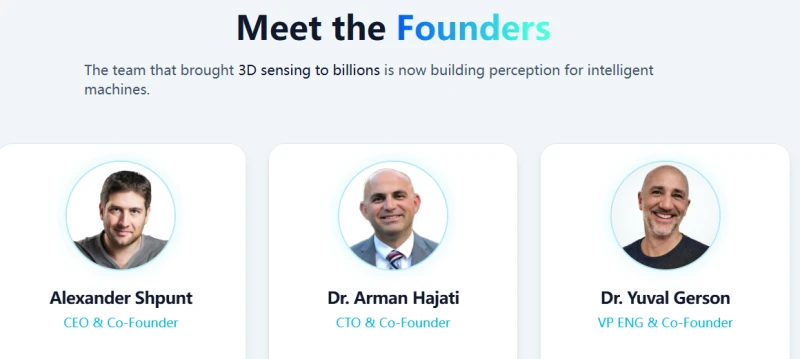
Shpunt is currently the CEO of Lyte. He previously co-founded a 3D sensing company called PrimeSense, which worked for Microsoft. Kinect provides technical support. In 2013, PrimeSense was acquired by Apple for $350 million, marking the beginning of Face ID technology.
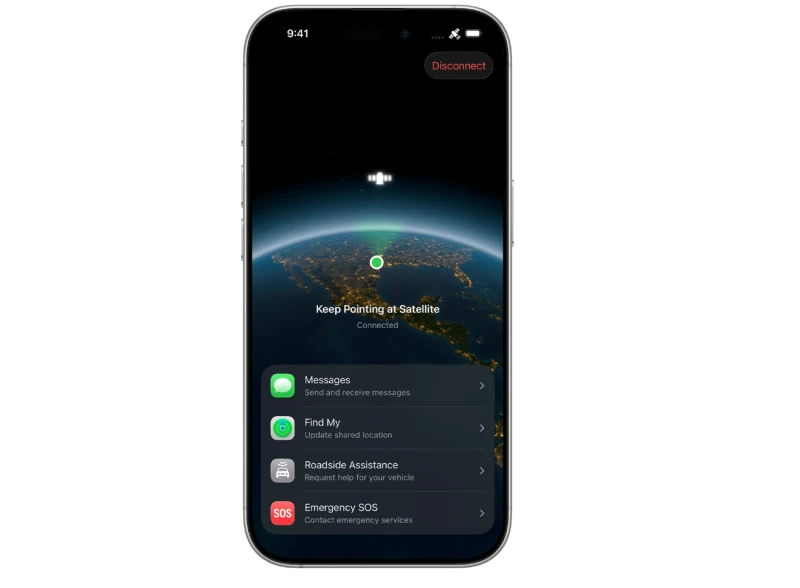
Currently, Apple's Face ID is one of the most advanced identification and authentication technologies on the market, offering extremely high security and convenience, far surpassing traditional 2D face recognition. It can help Apple users unlock their iPhones or iPads, make Apple Pay payments, and authenticate their identities within apps.
In an interview, Shpunt said, "We want to bring the best things Apple taught us—the pursuit of detail, operational excellence, and how to amaze users—to the robotics market. Apple is undoubtedly a very good school."
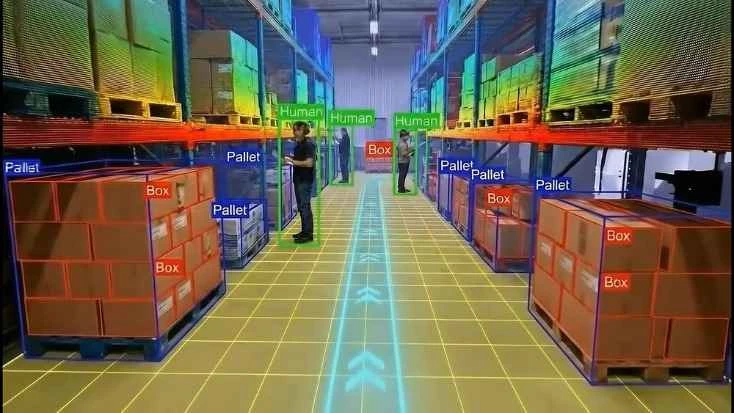
Shpunt believes Lyte will become the "visual brain" of robots, combining the functions of eyes and the visual cortex, focusing on perception and environmental understanding technologies. The company's flagship product, LyteVision, integrates three types of sensors. The system includes a camera, an inertial motion sensor , and a 4D sensor that can simultaneously measure distance and speed.
The press release states that LyteVision supports a variety of physical AI platforms, including autonomous mobile robots, robotic arms, quadruped robots, driverless taxis, and humanoid robots. The system layer will continue to advance with breakthroughs in vision, language, and motion models, enabling physical AI systems to perceive, reason, and act with increasingly higher intelligence over time.
Shpunt said, “We realized that perception—more broadly, enabling robots to understand what they are doing, ensure their safety, and react immediately to their surroundings, rather than being like ‘zombie robots’—is a problem that must be solved. So we decided to focus on solving it.”
Lyte's selling point is its "plug-and-play" all-in-one solution, integrating sensors and other components into a unified architecture. The technology also won the "Best Innovation Award" in robotics and the "Honorary Award" in advanced mobility at CES 2026 in Las Vegas this week.
He stated that the company plans to use existing funds to continue investing in core product R&D, hiring more employees, and expanding its business. Despite the challenges facing the robotics industry in battery technology... While many challenges remain in terms of range, mobility, and safety, he believes Lyte will make substantial progress in the key area of "safety" within the next three to five years.
Currently, Lyte is also independently developing custom chips, optics, and software to reduce the complexity for robotics companies in supplier selection and system integration. The company points out that a major pain point in the industry is the lengthy sensor integration process, which often takes several years for a product to truly be deployed.
According to McKinsey & Company's forecast, the AI robotics market is expected to reach $125 billion by 2030. However, at the same time, approximately 60% of industrial enterprises still lack the internal capabilities to implement robotic automation, including sensor integration.
(Article source: CLS)