Japan becomes the first Asian country to break the Apple logo. Country-specific App Store in-app purchase (IAP) and app distribution rules.
On December 18, Apple made adjustments to its iOS apps in Japan to comply with Japan's "Act on the Promotion of Competition for Specified Smartphone Software".
Under the new regulations, developers in Japan enjoy several new rights: they can distribute iOS apps through third-party app stores other than the App Store, directly integrate third-party payment tools such as PayPay and LINE within their apps, or direct users to external websites to complete digital goods and services transactions, with Apple's commission rate ranging from only 10% to 21%. Simultaneously, Apple must allow app distribution via web sideloading, charging only a 5% core technology fee for such transactions. This series of adjustments completely breaks Apple's previous channel monopoly in the iOS ecosystem, and its fee levels are far lower than the current standards implemented in the Chinese market.
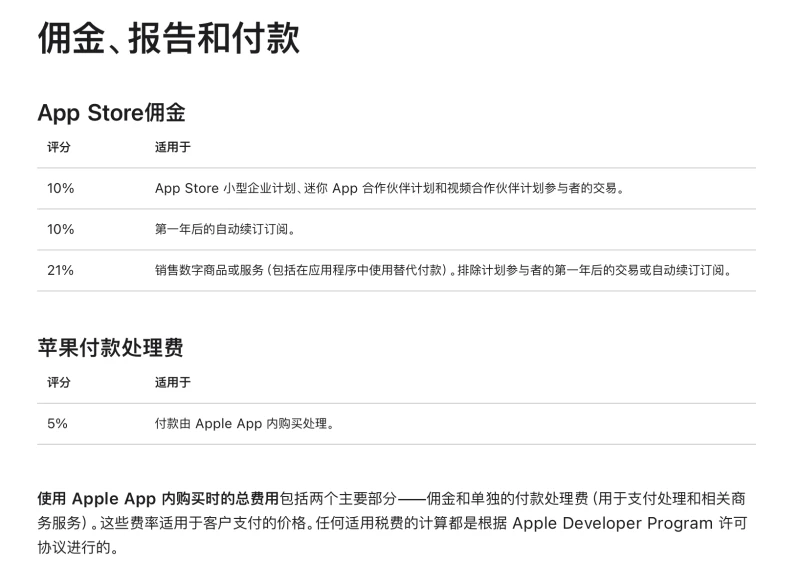
Screenshot from Apple Japan's official website
The changes in Japanese taxes are not an isolated case. In recent years, many countries and regions around the world have pushed for adjustments to Apple's channel rules through legislation or judicial rulings. In April of this year, the U.S. District Court for the Northern District of California ruled that U.S. developers can add external transaction links within their apps without paying any commission to Apple; in June, Russia passed a legal amendment forcing Apple to open up sideloading functionality and prohibiting it from imposing mandatory pricing and restricting payment methods; in October, the UK Competition Appeal Court ruled that Apple's 30% "Apple tax" charged to UK users constituted an unfairly high price, clarifying that the reasonable rate range was 10%-17.5%, and ruling that Apple's abuse of its dominant market position and exclusive practices harmed market competition.
As Apple's fourth largest revenue market globally, the Japanese government had already put pressure on Apple last year, requiring it to open up external payment channels, third-party app stores, and web-side loading channels through regulations.
Last April, the Japanese Diet formally passed the aforementioned Promotion Law. This law, modeled after the EU's Digital Markets Act, authorizes the Japan Fair Trade Commission (JFTC) to impose a series of prohibited behaviors and compliance obligations on designated software providers with monopolistic positions. The aim is to create a healthy competitive environment for the mobile ecosystem in Japan and stimulate innovation and consumption. In July of this year, the JFTC published supplementary regulations and enforcement rules to the law.
Besides Japan, Apple's channel policies in the Chinese market have always been a focus of the industry. Currently, Apple still applies a standard 30% commission rate to "standard enterprises" in China, with a preferential rate of only 15% for small businesses.
While domestic tech companies haven't publicly questioned the standard 30% "Apple tax," some industry executives have explicitly stated that the high commissions charged by app stores are for games. The heavy burden on industries such as digital content.
Many industry insiders have stated that, whether driven by regulatory guidance or business development needs, a reduction in app store commission rates is an inevitable trend in the industry. With channel reforms continuing in many regions globally, whether Apple will further adjust its commission policy and open up more channel permissions in the Chinese market has become a core issue of industry concern.
(Article source: CBN)