Just as US stocks were nearing record highs, Wall Street strategists were concerned about artificial intelligence. Concerns about an (AI) bubble seem to remain dismissed. At least for now.
In a recent interview, Mary Ann Bartels, chief investment strategist at Sanctuary Wealth, said, "I don't see a bubble at all. However, I do think we are about to enter a bubble."
Bartels compared the current market to previous bubbles, including the late 1920s and the dot-com bubble. She explained, "The trends are indeed very similar. I think a bubble is forming, but it may not burst until 2029-2030."
However, for now, Bartels predicts that technology stocks will continue to lead the market higher until 2030. She projects that by 2030, the S&P 500 will... The S&P 500 index is expected to close between 10,000 and 13,000 points.
“That’s why we’re calling 2026 the ‘Year of Fearlessness,’ because there’s still a lot of upside potential in this market, especially in the tech sector,” she said.
She also specifically mentioned that some of the upside potential comes from semiconductors. Stocks. These stocks, once considered commodity stocks, have now transformed into growth stocks, including Nvidia. "It has essentially rewritten the development path of semiconductor chips."
So far this year, the stock price of this artificial intelligence chip giant has surged by more than 37%, reaching a market capitalization of $4.6 trillion, making it the most valuable publicly traded company. Last Friday, Nvidia's stock price rose further after it announced a $20 billion licensing agreement with specialty chipmaker Groq.
In addition, UBS strategists also expect the boom in artificial intelligence and strong profit growth to support the market rally in 2026.
In a report, the bank's strategists noted, "We observe that the current forward P/E ratio is only slightly higher than at the beginning of the year, which further demonstrates that what is driving the market up is earnings growth, not a valuation bubble."
UBS expects the S&P 500's earnings per share to grow by about 10% year-over-year, and the index to rise to 7,700 points by the end of next year.
Ed Yardeni, a Wall Street veteran and founder of the investment consulting firm Yardeni Research, also believes that the S&P 500 will reach 7,700 points next year, and he estimates the probability of his "2020s boom" scenario occurring at 60%. He cites the "big and beautiful" tax reform bill passed this year and the artificial intelligence boom as reasons.
Previously, Goldman Sachs Analysts have also stated that there is no bubble in the stock market because the rise in tech stocks is mainly due to real growth, not speculative bets. The bank points out that the best-performing companies have strong balance sheets, the artificial intelligence industry is still largely dominated by a few large companies, and most bubbles occur when many new entrants flood into popular sectors.
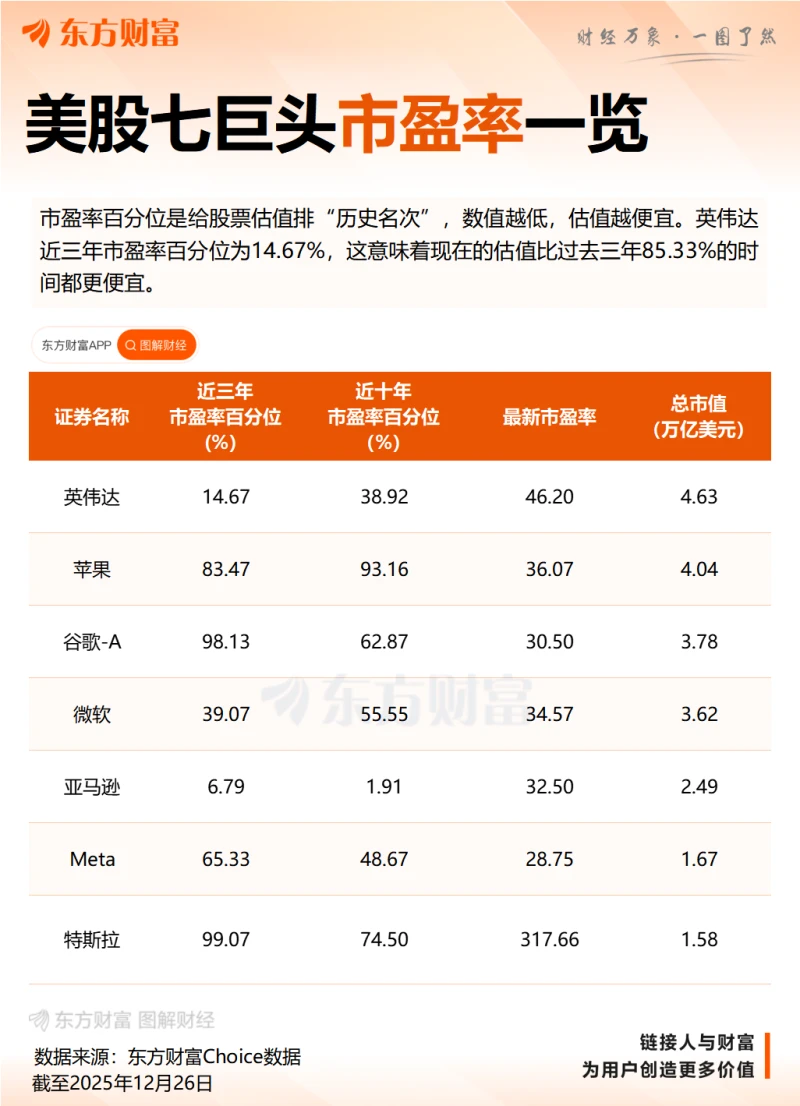
On the other hand, while most of this year’s earnings growth was led by the seven largest stocks in the S&P 500, Goldman Sachs analysts also believe that the ranks of companies participating in growth are expanding.
Goldman Sachs ’ Ben Snider wrote earlier this month: “We expect the macro-positive impact of faster economic growth and a reduced drag on profit margins from tariffs to support faster earnings growth for the remaining 493 stocks.”
Meanwhile, Rain Equity founder Joseph Shaposhnik said that the productivity of artificial intelligence is expected to boost earnings for companies outside the "Big Seven" tech stocks.
“I think some of these companies will take a break, and some will perform well. But actually, the opportunities for huge returns next year will not be in these seven companies,” he added.

Dongcai Illustrated Guide: Some Useful Tips
(Article source: CLS)