At the FII Priority Asia forum held in Tokyo on December 1, SoftBank Group founder Masayoshi Son first discussed selling off his Nvidia shares. He made a public response and shared his views on the "AI bubble theory".
Masayoshi Son stated that if SoftBank had "unlimited funds" to advance its AI initiatives, he would never have sold his Nvidia stock. He explained that he was forced to part with it to heavily invest in projects like OpenAI. "I cried when I sold Nvidia ," Son said.
Regarding the recent "AI bubble" theory, which has been repeatedly discussed, Masayoshi Son refuted it, saying that such a claim is "not smart enough." He pointed out that if AI can contribute 10% to global GDP in the future, even with investments in the trillions of dollars, it would be far from being a bubble.
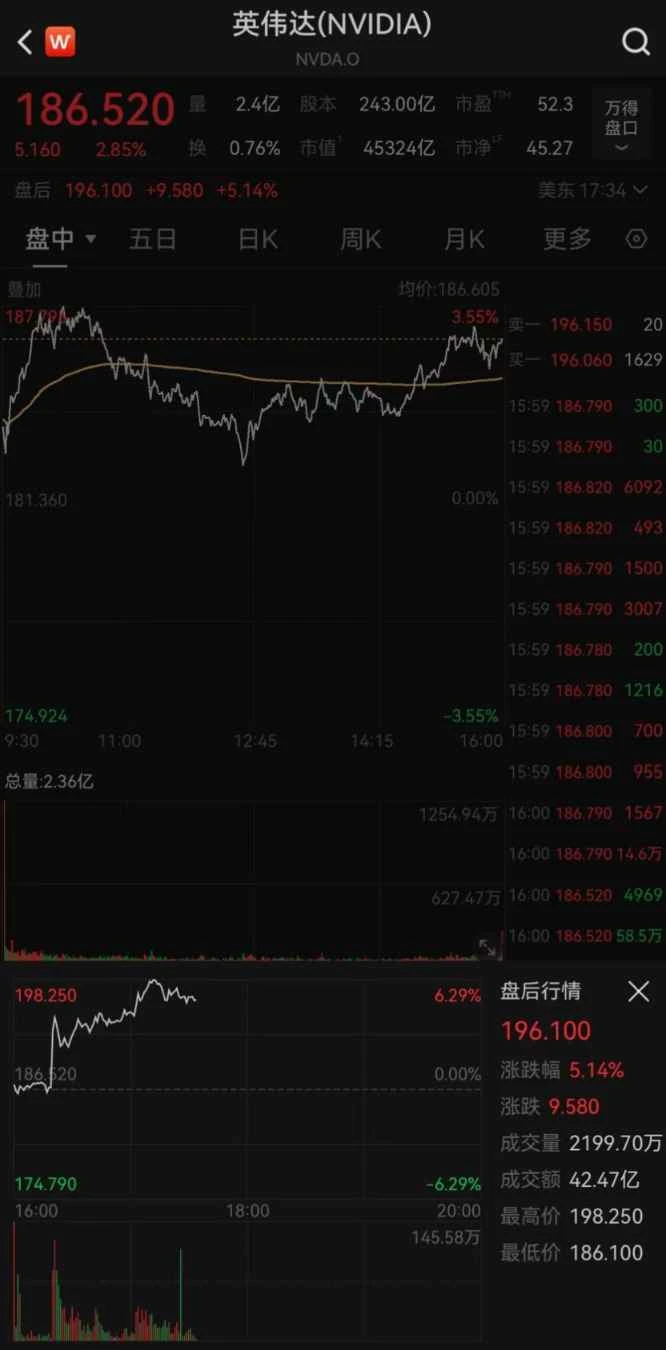
On November 11, SoftBank released an earnings report stating that as of the end of the second quarter, it had sold 32.1 million shares of Nvidia stock (including those held by its asset management subsidiary) for $5.83 billion in October 2025.
This is not the first time SoftBank has sold off its entire stake in Nvidia. In 2017, SoftBank acquired nearly 5% of Nvidia's shares for $4 billion, becoming one of its major shareholders. However, in 2019, due to liquidity needs and its assessment of Nvidia's stock price potential at the time, SoftBank sold off all its shares for $7 billion, missing out on the super bonus of Nvidia's subsequent surge in market capitalization from hundreds of billions to trillions of dollars.
Starting last year, SoftBank began rebuilding its position in Nvidia, with holdings of $1 billion in the fourth quarter of last year and increasing them again to approximately $3 billion in the first quarter of this year, until it liquidated its entire stake.
SoftBank has poured significant funds into OpenAI. Earlier this year, SoftBank agreed to invest $30 billion in OpenAI by the end of December, exceeding any other investor's investment in OpenAI to date. The first round of $10 billion financing was completed in the first quarter, with $2.5 billion allocated to co-investors through a syndicated loan and the remaining $7.5 billion invested by SoftBank Vision Fund 2. As of the end of the second quarter, co-investors had committed to subscribing to the entire $10 billion syndicated loan (including the $2.5 billion allocated in the first round).
While clearing out its Nvidia holdings, SoftBank announced an additional $22.5 billion investment in OpenAI, with plans to complete the entire investment through SoftBank Vision Fund 2 in December.
Besides OpenAI, SoftBank is also actively seeking other areas where it can benefit from AI, such as robotics . Billions of dollars have been invested in startups and chip industry companies. In October, SoftBank agreed to acquire the robotics business of Swiss industrial giant ABB for $5.4 billion. On November 26, SoftBank subsidiary Silver Bands completed its acquisition of U.S. semiconductor... The acquisition of all shares of design firm Ampere Computing. Following the transaction, Ampere Computing officially became a wholly owned subsidiary of SoftBank Group.
All of these investments forced SoftBank to raise a large amount of money in a short period, and also served as the company's practical rebuttal to the "AI bubble theory." Previously, many industry insiders pointed out that in the field of artificial intelligence... Driven by the frenzy, the stock prices of tech giants soared too quickly, bearing a resemblance to the dot-com bubble that eventually burst in 2000.
In response, Nvidia CEO Jensen Huang stated that he and the company do not see a bubble and believe that we have now "entered a virtuous cycle for AI."
Alibaba During a recent speech at the University of Hong Kong, Chairman Joseph Tsai, Chairman of Lenovo Group, also addressed the "AI bubble theory." He believes that while AI may experience a financial bubble, its technological foundation is real and reliable, drawing parallels to the bursting of the dot-com bubble in 2000, where the internet did not disappear but instead became stronger. All resources invested in AI infrastructure and model development will not be wasted. However, Lenovo Group Chairman and CEO Yang Yuanqing believes that AI is not a bubble; it is profoundly changing people's lives and work.
(Article source: Jiemian News)