On Wednesday (December 24) local time, Nvidia was considered... Groq, a challenger in the tech industry, announced on its website that it has entered into a non-exclusive licensing agreement with NVIDIA . Groq founder and CEO Jonathan Ross, president Sunny Madra, and other key executives and team members will join NVIDIA .
This was not an acquisition of the entire company. Nvidia paid approximately $20 billion in cash for Groq's core AI inference technology intellectual property. The assets and related assets will be transferred, while Groq's cloud services business (Groq Cloud) will continue to operate independently.
This is considered a typical way for tech giants to compete for top AI talent and technology, allowing them to quickly acquire key innovations by bypassing complex antitrust reviews. For Groq, this may mean the end of its journey as an independent hardware challenger, but its core technologies will gain access to a broader development platform within Nvidia's ecosystem.
Groq is a star startup specializing in AI inference chips . Founded in 2016 and headquartered in California, USA, its founder, Jonathan Ross, previously worked on Google's self-developed AI chips. He was a core member of the TPU (Tensor Processing Unit) project's R&D team, and some former Google TPU team members also joined Groq.
Jonathan Ross, a core developer of Google's first-generation Tensor Processing Unit (TPU) project, was deeply involved in the design of chips optimized for AI. This project was later used in AlphaGo, which defeated Go champion Lee Sedol, and is also key hardware for Google's AI services. In 2016, he led seven of the ten core members of the Google TPU team to leave the company and found Groq. At the time, he realized that traditional computing architectures (such as CPUs/GPUs) could not efficiently handle modern AI tasks, a realization that prompted him to start a company that would break through traditional limitations.
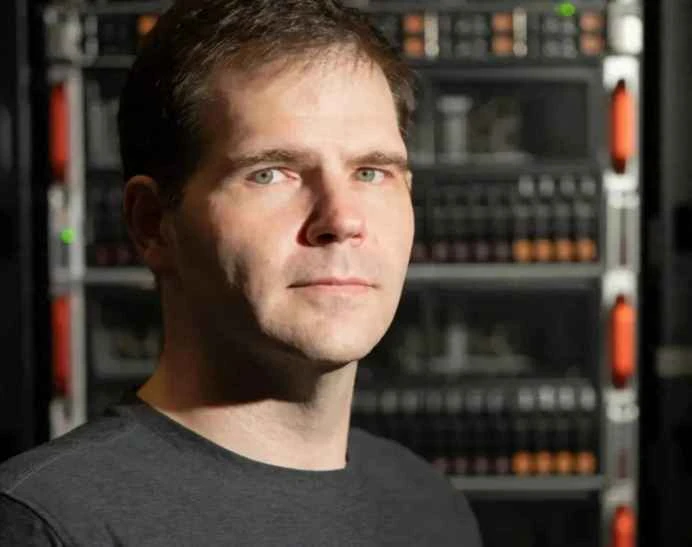
Jonathan Ross
Groq's core product is the LPU (Language Processing Unit), which is mainly used to accelerate the speed of large language models to complete inference-related tasks and is regarded by the outside world as one of the alternatives to NVIDIA GPUs.
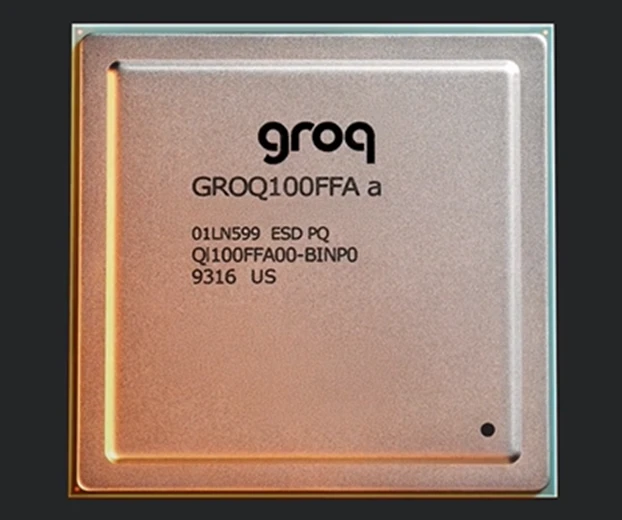
In February 2024, Groq launched a brand-new AI chip , claiming to achieve "the most powerful inference on earth"—running large models on Groq is 10 times faster or even faster than NVIDIA GPUs.
In November 2025, the White House and the U.S. Department of Energy... The latest statement from the ministry shows that 24 top artificial intelligence companies The company has signed an agreement with the U.S. government to join Genesis . The plan includes Nvidia and Groq.
Currently, Groq has partnered with Meta to provide inference acceleration for its Llama API; collaborated with IBM to integrate its AI inference platform; and signed a massive agreement with Saudi Aramco to build a large-scale AI inference data center. .
Groq LPU: Amazing inference speed but high cost
Groq LPU's astonishing inference speed and differentiated technical approach are considered the foundation of its success. Its text generation speed (up to 500 tokens per second) on large models such as Llama and Mixtral has garnered widespread attention and is considered to far surpass that of GPUs of the same period.
In addition, Groq LPU works differently from NVIDIA GPUs. It uses an architecture called Temporal Instruction Set Computer and uses static random access memory (SRAM), which is about 20 times faster than the high bandwidth memory (HBM) used by GPUs.
The chip specifications show an SRAM capacity of 230MB, a bandwidth of 80TB/s, and an FP16 computing power of 188TFLOPs. This difference results in the difference in generation speed between the LPU and the GPU. According to Groq, NVIDIA GPUs require approximately 10 to 30 joules (J) to generate each token, while Groq only requires 1 to 3 joules.
However, the Groq LPU is not perfect. It faces challenges in terms of cost and versatility, resulting in high purchase and maintenance costs for the large clusters required to run large models. Furthermore, dedicated chips are difficult to flexibly adapt to rapidly iterating AI algorithms.
Former Alibaba Jia Yangqing, Group Vice President and founder and CEO of Lepton AI, once stated on social media that since each Groq card has a memory capacity of only 230MB, 305-572 Groq cards are needed to run the Llama-2 70B model, while only 8 cards are needed with the H100.
Jia Yangqing believes that, based on the costs over the next three years, Groq's hardware procurement cost will be $11.44 million, and its operating cost will be at least $762,000. At current prices, this means that for the same throughput, this is almost 40 times the hardware cost and 10 times the energy cost of the H100.
It's not just about high cost. SRAM technology has a large footprint and high power consumption, and it has long been integrated into SoCs (System-on-a-Chip) as IP cores, rather than being used independently. Therefore, it doesn't have the same future development potential as HBM. Industry insiders say that, overall, whether comparing price per unit capacity, performance, or power consumption, the HBM technology used in NVIDIA GPUs is superior to SRAM.
Valuation soars to $6.9 billion; revenue last year: $90 million
Groq has completed multiple rounds of financing, with its latest valuation at approximately $6.9 billion .
2017: Seed round of $10.3 million.
2021: Raised $300 million in Series C funding, achieving a valuation of over $1 billion, becoming a unicorn. .
August 2024: Completed by BlackRock BlackRock led a $640 million Series D funding round, valuing the company at $2.8 billion.
September 2025: Completed a new round of strategic financing of US$750 million, with its valuation jumping to approximately US$6.9 billion.
Groq is backed by top multinational financial institutions, leading technology giants, and active venture capital funds.
Financial institutions serve as the cornerstone: top global asset management firms such as BlackRock and Neuberger Berman have participated in numerous large-scale financings, as have D1 Capital, Altimeter Capital, and 1789 Capital.
Deep involvement of industrial capital: Samsung, Cisco Investments by industry giants such as Deutsche Telekom Capital Partners (DTCP) are not merely financial transactions, but rather strategic collaborations. For example, these collaborations may involve chip manufacturing, data center deployment, or market distribution channels.
Professional funds continue to lead the investment: Disruptive (long-term lead investor) and Infinitum. Among them, Disruptive, a representative venture capital fund, served as the lead investor in the latest $750 million financing round in 2025.
However, the valuation of nearly $7 billion represents a significant premium compared to the projected revenue of $90 million in 2024 .
Groq has significantly lowered its 2025 revenue forecast. In July 2025, Groq drastically reduced its 2025 revenue forecast from $2 billion to $500 million . This may be due to delays in the delivery of some large orders (such as the agreement with Saudi Arabia) and the progress of data center construction.
Groq previously informed investors that its revenue would increase to nearly $1.2 billion (approximately RMB 8.6 billion) in 2026 and exceed $1.9 billion (approximately RMB 13.6 billion) by 2027, mainly from direct sales of hardware to other companies.
As of mid-2025, Groq had more than $2 billion in cash on hand, and the company still had ample cash reserves to support its future expansion.
(Article source: CLS)