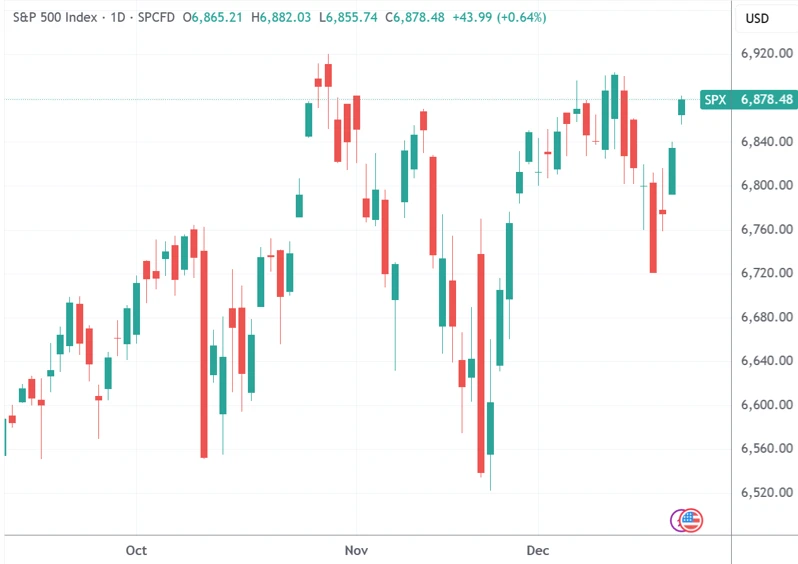
The hottest sector experienced a sharp sell-off.
Commercial spaceflight, a hot topic in the US stock market The sector suddenly suffered a sharp decline. On December 26th, Eastern Time, US commercial space concept stocks collectively plummeted, with "space bull stock" Sidus Space plunging over 12%, Rocket LAB USA falling over 8%, and AST SpaceMobile dropping nearly 8%. Analysts pointed out that increased market concerns about the high valuations of related concept stocks and continued selling by major shareholders were the main reasons for the sharp drop in commercial space concept stocks.
It is worth noting that the United States has been making a series of significant moves in the aerospace field recently. NASA's newly appointed administrator, Jared Isaacman, recently stated that the United States will return to the moon during Trump's second term (i.e., within three years). He also revealed that the Artemis 2 mission—NASA's first test flight carrying astronauts on a Space Launch System (SLS) rocket and the Orion spacecraft—is expected to launch in the near future.
US aerospace stocks suffered across-the-board plunges
On December 26th, Eastern Time, US commercial space stocks plummeted across the board. By the close of trading, Sidus Space had plunged 12.27%, Rocket LAB USA had fallen 8.46%, AST SpaceMobile had dropped 7.82%, and Virgin Galactic... It fell sharply by 5.39%.
It's worth noting that in early trading on that day, Sidus Space surged by over 53%, reaching its highest level since January of this year, before plummeting and ultimately closing sharply lower.
In terms of news, several Wall Street analysts have recently expressed concerns about the overvaluation of commercial spaceflight stocks. As of now, AST SpaceMobile and Rocket LAB USA have seen year-to-date gains of 241% and 177% respectively, while the S&P benchmark index has risen by only 17.5% over the same period.
Analyst StoneFox Capital stated, "Despite the possibility of speculative price increases, AST SpaceMobile is too expensive for realistic financial goals, given the repeated launch delays and execution uncertainties."
Meanwhile, major shareholders have also begun a large-scale reduction in their holdings. According to the latest data disclosed by Rocket LAB USA, company director Armano Nina reduced her holdings by a total of 27,300 shares on December 19, 2025. In the past three months, a total of seven major shareholders have reduced their holdings by a total of 2,672,500 shares.
In addition, MarketBeat analysts pointed out that Sidus Space is facing a severe cash flow crisis due to its rapid cash burn and the need for funding to support the production of LizzieSat-4 and LizzieSat-5 (planned to begin production by the end of 2026).
This further exacerbated market concerns following the company's earlier announcement that it had secured an unrestricted delivery, unrestricted quantity (IDIQ) contract from the U.S. Missile Defense Agency (MDA) for its Scalable Indigenous Innovation Layered Defense (SHIELD) program.
It is understood that SHIELD is the second diversified contract framework launched by MDA for the "Golden Dome" project. Positioned as a more inclusive enterprise-level contract platform, it will cover more than 19 work areas, including prototype development, weapon design, systems engineering, data analysis and mining, and cybersecurity. The total value of the contracts is as high as $151 billion.
Stimulated by the news, Sidus Space's stock price once soared to $3.38, with a weekly increase of over 191%.
NASA: We will definitely return to the moon.
NASA’s new administrator, Jared Isaacman, recently stated that the United States will return to the moon during Trump’s second term (i.e., within three years).
On December 26 local time, Isaacman said in an interview that Trump's renewed commitment to advancing lunar exploration is key to unlocking the "orbital economy".
Isaacman said, "We hope to have this opportunity to explore and unlock the potential of the Moon in scientific, economic and national security aspects."
Last week, the U.S. Senate confirmed Isaacman's nomination with a vote of 67 to 30. This was Isaacman's first public speech since taking office.
Isaacman is the founder of Shift4, an American payment service provider. He has close ties with Elon Musk, having funded SpaceX, Musk's company, and traveled to space aboard the company's spacecraft multiple times.
In a recent interview, Isaacman stated that opportunities on the moon include building space data centers. Along with related infrastructure, it may also mine helium-3, a rare gas embedded in lunar soil, which could become an important fuel for nuclear fusion power generation in the future.
He added that after the “lunar base” is completed, NASA will also study investments in nuclear energy and space nuclear propulsion technology to drive deeper space exploration.
Currently, NASA is collaborating with several contractors, including SpaceX, Blue Origin, and Boeing. They jointly participated in the Artemis lunar landing program. This program not only aimed to return to the moon but also to prepare for future Mars missions.
NASA originally planned to launch Artemis 3 in 2024. However, NASA announced last year that Artemis 2 would be postponed to April 2026, and Artemis 3 to 2027.
In the interview, Isaacman revealed that Mission 2—NASA's first test flight with an astronaut aboard the Space Launch System (SLS) rocket and the Orion spacecraft—is expected to launch in the near future.
He stated, "SpaceX and Blue Origin are refining heavy-lift rocket technology and incorporating on-orbit cryogenic propellant transfer to make rockets more reusable. These technologies will enable us to make frequent, affordable trips to the Moon and lay the foundation for future missions to Mars and beyond."

(Source: Securities Times)