As early as Nvidia Before the release of the third fiscal quarter earnings report, regarding artificial intelligence Warnings of an (AI) bubble had been circulating, and investors had been hoping this earnings report would quell market anxieties. However, contrary to expectations, even an impeccable performance report was insufficient to reverse market sentiment.
In fact, there are many issues plaguing AI trading—from macroeconomic problems affecting the prospect of interest rate cuts to comments from key players like OpenAI. Ken Mahoney, CEO of Mahoney Asset Management, said the market is currently facing a "perfect storm."
Securities Jamie Zakalik, senior research analyst at investment firm Neuberger Berman, said: "If such strong Nvidia results and a positive tone haven't pushed the group (AI stocks) to new highs... there's nothing else that will be a positive catalyst by the end of the year."
So why couldn't even the traditionally strong "AI leaders" save the current bull market? There are likely several reasons:
1. The performance report itself is not perfect.
Swissquote Bank senior analyst Ipek Ozkardeskaya said investors may be unhappy with the chip giant’s “expanding inventory and unusual deferred revenue model.”
She explained that Nvidia "has been collecting huge upfront payments from customers and then recognizing those payments as revenue before the chips are delivered." She wrote in an email, "This isn't illegal. But if orders slow down in the future, it could leave gaps."
The fact that investors are closely watching these factors may indicate that Wall Street's attitude has shifted from optimism to caution.
“When you dig deep enough, you’re bound to hit the ground,” Ozkardeskaya writes. “People only start digging when they feel uncomfortable, and that discomfort is increasing.”
2. Changes in the outlook for Fed rate cuts
Wall Street's reaction to earnings was also related to changes in expectations surrounding the Federal Reserve's next interest rate decision, to be announced in December.
Zakalik stated that the market seems to perceive a "very low" likelihood of an interest rate cut, and that the September unemployment data released on Thursday was "not entirely accurate." Due to the previous government shutdown, the Federal Reserve will not have access to the October and November unemployment data until after the interest rate decision is announced.
Mark Malek, chief investment officer at Siebert Financial, commented that uncertainty surrounding the Federal Reserve is "the single biggest sentiment driver in recent weeks."
"Does a 25 basis point rate cut in December or January really have anything to do with Nvidia or Meta's performance over the next five years?" Malek asked. "Please tell me your answer is 'no'!"
"But alas, investors have focused so much of their attention on (the Fed's) policies that they have distorted many of their ability to make rational, fact-based decisions."
However, it should be noted that the interest rate environment has a significant impact on high-growth technology companies that are sensitive to borrowing costs.
3. OpenAI related issues
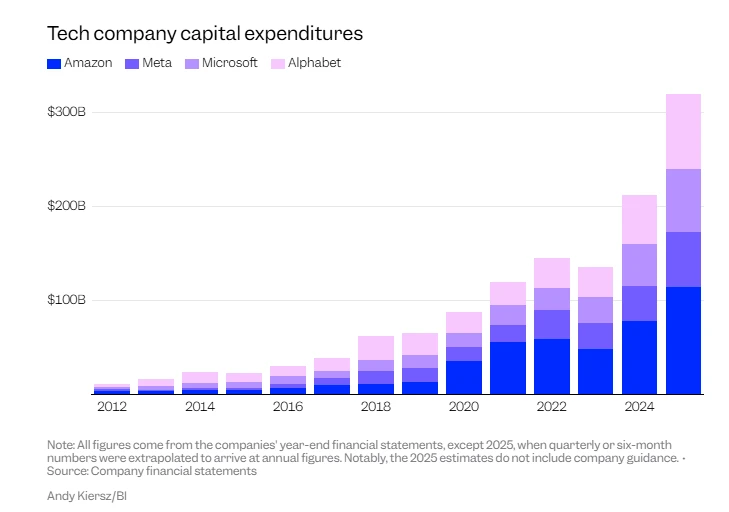
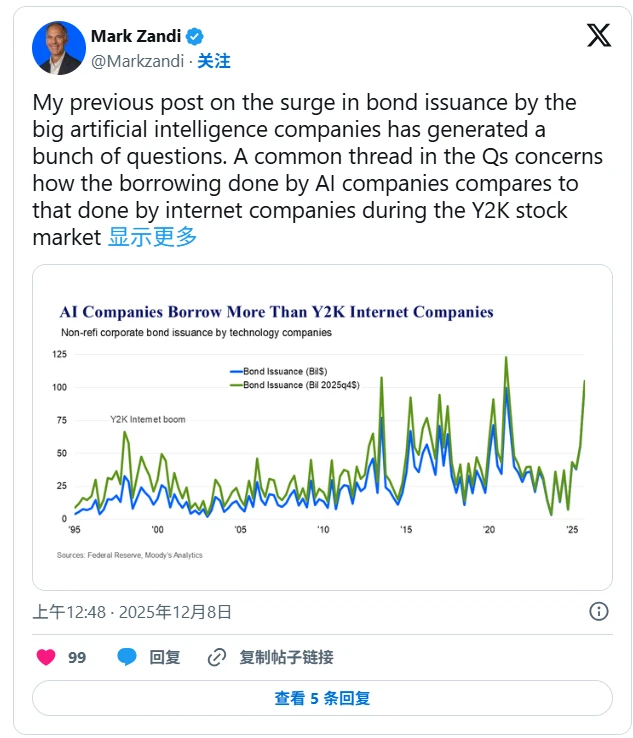
Zakalik pointed out that AI-driven transactions have issues that Nvidia cannot control, including Oracle. Debt financing from major clients like Oracle Corp., and long-standing concerns about the over-investment of AI infrastructure. It all increasingly comes back to OpenAI, which recently secured massive deals with a host of tech companies, far exceeding its current revenue.
He added that the market is “sensitive” to anything related to OpenAI and its ability to deliver on its promises in the coming years.
Gil Luria, head of technology research at DA Davidson, stated that investors are increasingly concerned that OpenAI may make promises it cannot keep as it attempts to raise substantial funds. He cited CoreWeave, which is borrowing money to build a data center for OpenAI. However, OpenAI, the creator of ChatGPT, did not actually have enough funds to cover these expenses.
Luria noted, "People have developed bubble-like post-traumatic stress disorder from this behavior, which has impacted the stock market in recent weeks."
Moreover, OpenAI seems unable to dispel investors' doubts. Earlier this month, the company's CFO, Sarah Friar, stated at an event that she had considered government "support," although she later clarified that it was a "misstatement."
4. Competitors overtake and surpass the leaders.
Although ChatGPT was once a chatbot While OpenAI is a representative of OpenAI, its parent company Alphabet has also been making progress through its own efforts, which both raises doubts about OpenAI's future dominance and highlights Alphabet's success with its internal hardware.
Bloomberg Intelligence technology analyst Mandeep Singh believes that Google's Gemini 3, released last week, may be one of the reasons for the negative market performance.
Alphabet stated that its AI model outperforms OpenAI's ChatGPT 5.1 and Claude Sonnet 4.5 in areas such as scientific reasoning and agent tasks. Singh believes this suggests that Google's capital expenditures may be going further than other hyperscale companies that rely more heavily on Nvidia chips.
While Singh expects Google to remain an Nvidia customer, the latter will likely have to rely more heavily on Microsoft. It needs to work with other major clients such as Meta Platforms Inc., as well as OpenAI, to generate $330 billion in revenue next year.
In a report, he wrote: “I think now, as Nvidia’s funding grows, this question has resurfaced: how much money is spent on training and how much on inference, since inference spending is reflected in the revenue of hyperscale computing like OpenAI and Anthropic.”
Inference refers to the process of running an AI model, while training is a sunk cost. Singh added that while training models to improve them is important, inference is related to the monetization (commercialization) of AI models.

(Article source: CLS)