According to the minutes of the Federal Open Market Committee (FOMC) policy meeting held on December 9-10, 2025, although most officials supported further interest rate cuts on the premise that inflation continued to decline, there were significant differences among the members on the timing and magnitude of the rate cuts.
The meeting minutes revealed that some officials who supported the rate cut considered the decision a "delicate balance," even stating that they "could have supported maintaining the target interest rate range unchanged." This statement highlights the cautious approach taken during the decision-making process. Ultimately, the FOMC voted 9-3 to cut the federal funds rate by 25 basis points for the third consecutive time, bringing the benchmark interest rate range down to 3.5%–3.75%.
The dissenting votes came from three committee members: Governor Stephen Miran advocated for a larger 50-basis-point rate cut; Chicago Fed President Austan Goolsbee and Kansas City Fed President Jeff Schmid advocated for keeping the rate unchanged.
Of the 19 policymakers in the broader panel, six expressed reservations about the rate cut through their 2025 interest rate projections—they suggested that rates should remain at 3.75%–4.00% by the end of the year, the level seen before the December meeting. This reflects a clear division within the Committee regarding its assessment of the current stance of monetary policy.
The meeting minutes further pointed out that some members believed that "after lowering the interest rate range at this meeting, it would be appropriate to keep the target range unchanged for a period of time," which is consistent with the aforementioned forecast direction. Although the median interest rate forecast released after the meeting pointed to a 25 basis point rate cut in 2026, the individual forecast range was extremely broad, and the market generally expects at least two rate cuts in the coming year.
Regarding policy trade-offs, the minutes revealed two core concerns: firstly, most participants believed that transitioning to a more neutral policy stance would help prevent a severe deterioration in the labor market; secondly, several committee members warned Qualcomm. Inflation may be deeply entrenched, and if interest rates are cut further while inflation data remains high, the market may interpret this as a weakening of the Federal Reserve's commitment to its 2% inflation target.
Chairman Powell stated at the press conference following the meeting that the current interest rate level is "sufficient to prevent a more serious deterioration in the labor market, while still being able to continue to suppress inflation."
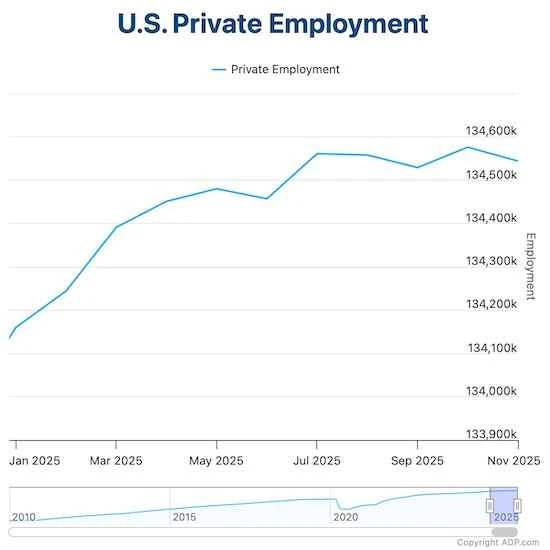
Due to the US government shutdown from October to November 2024, the release of key economic data has been delayed. Several committee members emphasized that labor market and inflation data released in the coming weeks will be crucial for decision-making at the January 2026 meeting. Newly released data to date shows: the unemployment rate rose to 4.6% in November, the highest since 2021; consumer price increases were lower than expected during the same period; however, third-quarter GDP annualized growth reached 4.3%, a two-year high. These conflicting signals have not yet bridged the internal divisions.
Following the release of the minutes, market pricing based on federal funds futures contracts indicated that the probability of a rate cut in January 2026 had slightly decreased to about 15%, reinforcing expectations that the meeting would maintain the current interest rate.
(Source: Xinhua Finance)